.png)

Ep. 6: Michael Johanns - smart charging enthusiast from Deftpower, energy transition, EV stakeholders, smart charging, projects, outlooks
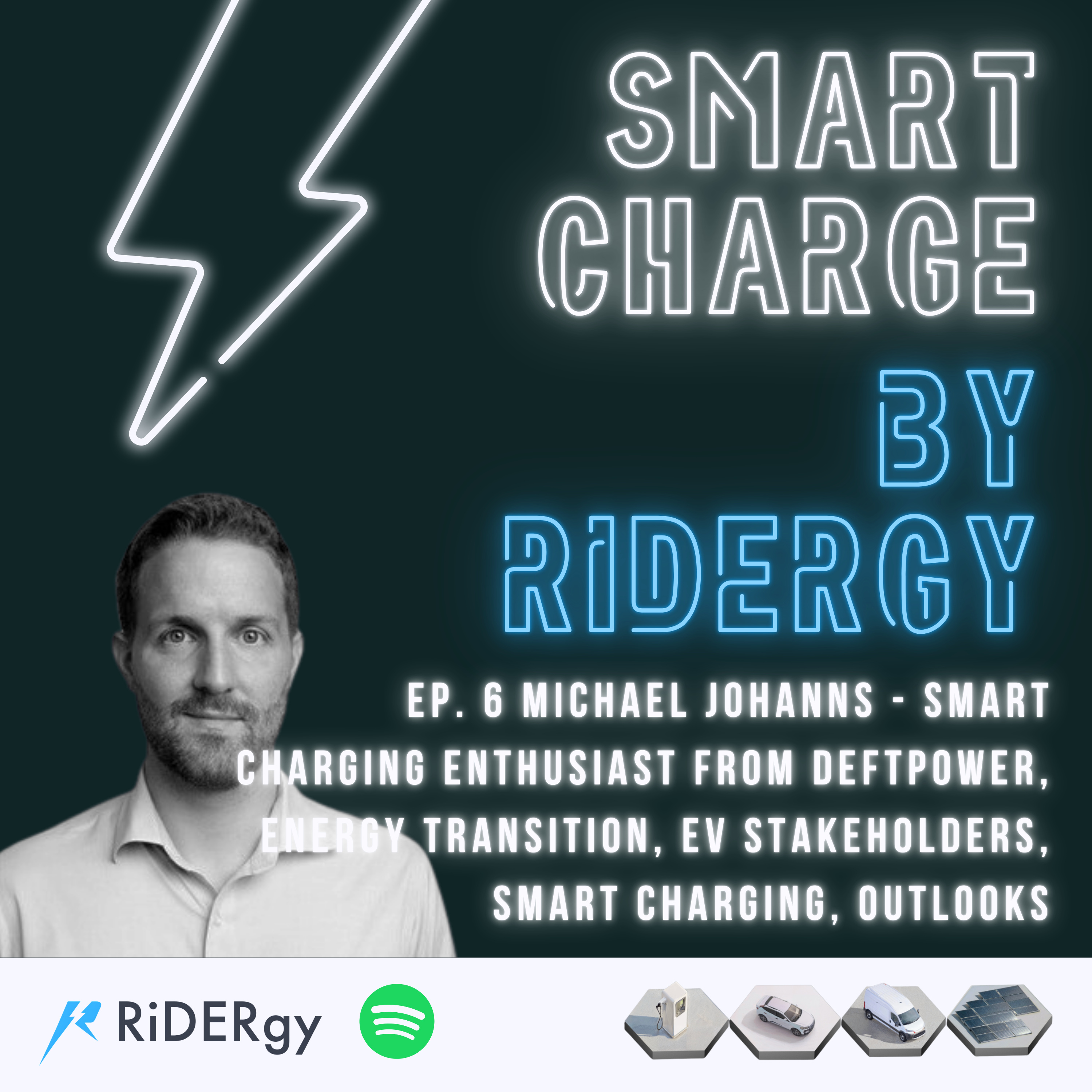
Michael Johanns brings a long experience in the energy transition and E-Mobility world. Now, he’s responsible for smart charging at a leading E-Mobility startup called Deftpower. Key discussions focused on his background, the energy and mobility transition, smart charging innovations, market dynamics, and fraud prevention within the electric vehicle sector. The session began with an in-depth conversation with Michael regarding smart charging, offering insights from a leading OEM on the industry's operational landscape. We analyzed the charging market's complexity, discussed key players like CPOs and MSPs, and examined the potential of bi-directional charging across different regions. Concerns surrounding fraud were addressed, highlighting prevalent tactics and prevention strategies in an industry characterized by a constant 'cat and mouse game.' The meeting concluded with an optimistic outlook, emphasizing the positive impact of reduced pollution on climate change and the ongoing transition toward more affordable mobility solutions, reinforcing that significant advancements are still anticipated.
文字记录
Welcome to the Smart Charge by RiDERgy podcast. This is Claudio Geyken, founder and CEO of RiDERgy. This is your show to learn about all things, energy management and smart charging innovation for electric vehicles and fleets.
So hey um Michael, how are you today? Nice that you're here. Hey Claudio, thanks for the invitation. Um, yeah, I'm doing quite well here in Berlin, nice weather, blue sky, finally the summer is coming back. So it's always for me, yeah, the moment where my joy also gets up. Cool, yeah, and um yeah, before we dive into more specific topics, maybe you can introduce yourself to to the listeners. What's your background? You can go as far as you wish, uh, what you think is relevant and
then uh to where you are today and what you're up to today. Yeah, perfect. um, please stop me, interrupt me when it's too long. So Michel Joan, I'm. Originally I'm a German speaking Belgian. I always say this because it's uh quite, yeah, one of the few. We are only 77,000 and uh it quite defines a lot to where I come from, so really from the Belgium Eiffel from a little village, um, but still you have more borders and surface, so everywhere. Uh, you have like, uh
different languages, different cultures around, uh, so, Belgium speaking, the French speakers, the Luxembourgish, the Germans, uh, so it's quite interesting region and uh therefore in my heart, uh, uh, yeah, a deep European, let's say. Um, same, yeah, exactly. So I, uh, studied in French. I studied in, uh, in Liege in Belgium, um, engineer, uh, finished my master in, uh, in, um, energy management, worked in a few years, uh, what is now total Energy, what was back then Lampiri, one of the first, um, yeah, bigger energy
suppliers in Belgium after the liberalization. Uh, we're number 3 on the market where I worked a lot with portfolio management, pricing, forecasts, uh, so got really this 15 minute rhythm in my blood, um, uh, because I had nothing to do with energy markets before. I was all wanted always to work in renewables and energy transition, but it was completely new for me to get it from a market side of which year was that? Uh, that was in 2015, um. And uh yeah, since then it's uh
10 years ago, um there were quite some years, quite some company hopping as well. I was perhaps not the most loyal person so I went from there, um, I came to Berlin, I did an MBA at the TU uh energy management focus as well. Uh, met my wife, stayed in Berlin, uh, worked a year at, uh, at EA 50 Hertz in the system of the Future team where we really thought, uh, or, or, uh, it was like a think tank where, where we were thinking about
yeah, the big changes and how they influenced the business of a TSO. I went in the COVID times to a smaller startup, Oxolar and worked there in uh in solar, solar business for apartment buildings, so complete change again, um, but from the TSO, the, the so-called uh grid autobahn to the very much lower. Apartment buildings. Yes, it was really apartment buildings, really, um, uh, we were thinking of a scalable solution of, uh, of, of putting kind of bicoon solar but on the roofs and split it
into the apartments, so really about a handful of watts instead of gigawatts at the at the TSO. Um, and yeah, then I, uh, I went to, uh, EE Volkswagen Group charging. I was there for the last, uh, or was not the last but was there as well, a bit over 2 years, uh, in the strategy department, everything around bi-direction charging, smart charging, um, the vehicle grid integration, um, and yeah, met, uh, the founder of Deft Power and, uh, was immediately convinced that, uh, this is, uh
where I want to work and this, uh, the topics where I want to work on. Yeah, very cool. Yeah, before we, uh, dive, dive deeper into these type of, uh, topics that you're working on, maybe just staying a little bit in the, in the past, so what are your key takeaways from the jobs that, uh, you had, things that you key learnings that you are still, uh, proud and, and, uh, satisfied of having made in these different positions that you had. Oh, that's a good question
So for my personal side, I really realized over the years that I'm not a project manager, uh, that I don't like local small solutions, but that I really want to work on scalable, um, bigger solutions, uh, like they're really scalable throughout countries, throughout markets, and even globally. And um yeah most of the times it is only possible with software where you still have the user contact but which is fully uh scalable and me not at all coming from the IT that was uh really over the
years one of the biggest learnings that I want to work in the software area um and that this is exactly. How I think, how I saw as well, uh, at all of the companies where the barriers were between my gross minds like not the gross mindset is uh wrong to say my mindset of creating growing scalable exponential business and, um, the, the limitations when you are doing project management which is, uh, you need more people for more projects and you can only, uh, it has a
limit to really scale this exponentially. Um, and the other learning is, I mean, I said earlier, I'm a pure European and this comes here as well. I have seen many different markets, uh, energy markets with different regulations. And there I've seen as well and especially in Germany with the landscape of 900 grid operators, little kingdoms, little little politicians locally that have the power of, of yeah, limiting scalability um that this is on the opposite. Side of what I see what we need to have, um, yeah
um solutions throughout Europe that scale into the millions um because what we need in the energy business in all of its kinds but specially mobility is really low unit costs um because uh yeah and high scalability and this doesn't work if you need to. Fill in some PDFs of a local grid operator uh that is only working in a tiny uh city you need to have regulation, you need to have possibilities to scale your solution throughout all of the markets uh immediately. Yeah, yeah, no, it
definitely resonates with me as well as a. I'm convinced, I'm convinced as well that software is gonna play such a crucial role and, and most energy experts, I think, haven't and energy indus industry profe professionals haven't really still grasped the complexity that lies in this distribution, um, of energy, um, as we have never experienced it before, the advance of renewables and all these EVs as we will definitely touch up on. In, in, in, yeah, I mean the, the energy transition until now it had its hurdles
um, but from a principle it was quite easy because, um, the 1st 30% of decarbonization you, uh, you, you put windmills in the existing system, you put solar panels in the existing system and the system itself can accommodate them more or less in some countries in some regions a bit better than in others, but, uh, it works. Um, and now we are, we are entering, we are actually, uh, uh, in the second phase where data is all where the, the forecasting is more important, where the
distribution or even, yeah, the consumption becomes more important because now we decarbonize the heating and mobility and that means that, um, yeah, they should, they should use the energy that comes from the wind and the sun and not. When somebody comes home and plugs in the car uh into into the wall and this is a complete new mindset of how you how you need to gather information, how you need to have interoperability and this uh is not compatible with. Distributed systems where we send text files
on servers from the 1970s, how the market communication in Germany is working. That that just is not compatible so we need to go into uh rest APIs. We need to have centralized servers that gathered information in real time that uh makes them accessible throughout the landscape to multiple parties and, uh, we cannot have this old system of, OK, I have here a little stadwork that sends a text file, uh, once a day or only once a week and then somebody reads the text file and then
process it that that's just not. Um, not scalable enough for what, uh, yeah, what we, what we need for the second phase of the, of the decarbonization. Cool. And before we move into the specifics now of, uh, de power and smart charging, maybe, uh, you said your last role was at, uh, Eli. It's been, uh, like one of the leading OEMs trying to traditional OEMs trying to, uh, take on a big role in the energy, uh, scene. How do you see OEMs, vehicle OEMs in the
future having a role in. In energy management and in in the energy transition as an energy player we've seen also quite a few announcements in the last few days I think or the likes of Renault, um, etc. that they try to also take a role in that. What's your view on on OEMs? Yeah, my, my, my views changed quite a lot, um, in a lot of pilot projects everybody said, oh, we need absolutely an OEM here, um, and uh in the business as well. I see
it a bit differently than a few years ago. I really thought that the OEMs have to catch the customer touch point and have this momentum by selling and. An EV to also get the whole ecosystem around it, um, and I, I don't say that it's impossible, but the reality has shown that OEMs don't own the customer and they don't have a touch point with the customer because, uh, cars get sold through and Tesla is a bit the exception, but, uh, the rest of the OEMs have
uh, dealerships, uh, importers, um, uh, they are often 3 people, uh, 3 companies in between. The production and the last sales and this is something that makes it super complex and also they all work really worldwide. And uh energy business is often a local business um or at least a continental business, and that makes it for them super hard and on top it is a software business and we have seen what the German OAMs, but also in general the European OAMs are capable of doing in
software. It's not that much um it's just they're too expensive. The innovation cycles are not built for this and uh what I rather see at the moment is the opposite that the OEMs are really focusing back on what they're good in. It's uh making a 4 year development cycle and bringing a new platform and producing it in mass, bringing the costs down and selling hardware um in software it's just the opposite in software you need to iterate often you need to test, uh, you need to
um, you cannot make 7 years planning for software um there will be so the whole logics, uh, also how the management in these companies work, they're just not the right people at the right places. Uh, and they're so hierarchical and not able to make distributed solutions, uh, like decisions because nobody's trained to make decisions or allowed even to make decisions. It makes it then of course super hard to, um, adapt the solution to a local market and, um, I see still the strengths of OEMs is
huge because they have this big branding, but I see it rather in corporations, uh, using partners that do software as a service like Dft Power but also like a lot of other companies on the market and finding per market per continent. A really fitting solution and trying then having for example um I come later to it, a good MSP, a good charging app where you have uh the app that you have under control, where you perhaps buy some snippets or some some parts of it, but
the rest you control at least the design and the user journey, and then, with a good API structure you partner in local markets with. Whoever you want, I mean, a Volkswagen could go to every utility in the world and say, hey, I want to partner with you. If you're a great forecasting algorithm, I have flexibility. Can we not do something together? You have the customers, I have, uh, the date of the car together and again it's, it's a numbers game. I can do this for some
cents. I want some euros. There's a nice business case, but don't try to get the customers in own energy contracts and own hardware installation and so on because just the, the people inside the organizations are. Not trained to be that fast innovate but also are too expensive to uh on the numbers and and what other startups other companies can do. OK, very, very interesting uh insight and then as a segue then, yeah, so what's draw you to um Def Power and, uh, Jacob the founder, what
was so compelling that you decided then to switch? So I've always in Eli and Volkswagen already before the reason why I joined uh Eli and Volkswagen was really this, OK,
you have this first touch more first customer touch point which is often uh the MSP business, uh, which is the, the, the, the, the public charging everybody that buys an uh an EV has a range anxiety and wants to know where he can charge and how much he pays for it. So the MSP business is a really crucial. Provider of this security that you know where the chargers are, that you navigate to them, that you know how much you will pay and that you're sure that
you have a contact person. To to complain or to call when you have a problem somewhere on the street and the charger doesn't work, which occurs sometimes, uh, which occurs less and less but still which can occur and then if you have a strong app and you see there, OK, I this charger doesn't work, but 100 m further I have another charger and your MSP has a good CPR rating engine where you know beforehand already it's only 2 stars, so you, you're a risk averse person
you go only to the 4 or 5 stars where you're 100% sure they will work and uh so. Therefore, already years uh uh ago Eli and DCS and others in the market, this MSP business was really crucial for the for the lift off of, uh, of immobility because even if you have a garage and a home charger from time to time you need to charge on the way and this gives you the security and uh by having the security. And this app and you like it
it can be the OEM app, it can be utility app, it can be whoever claims to be an MSP um you have this possibility. To really without any customer acquisition cost to start smart charging with these people and this was already my vision always at Eli to use the MSP uh of the OAMs uh and then building on top this first customer touch point and saying here here's actually a menu and we can do some peak off peak we can save you some money at home
some dynamic tariffs or whatever, um, because the OAEM or the MSPs can have the date of the car, can have the state of charge, can ask for a departure time, um, and this was my vision. And uh yeah, it was not. Not really built upon because it was different business units and different uh focus areas in OAM and then I met Jacob and uh that was the uh the the business or the the the the idea behind Dea Power why, why they founded Dev Power. It
was exactly combining MSP and smart charging and when I heard this I was like, OK. I, uh, I need to jump on that horse because, uh, it's, uh, it sounds like the story that I'm telling since years and cool and I changed just maybe because there are some listeners that might not be as familiar with all the jargon that we're gonna use let's make just a quick uh definition. So MSP maybe you can define that and then we can put it in in order of of
what an MSP is um needs to communicate with like CPO CPMSs, etc. Maybe we can also give a bit of a, yeah, yes, it's uh it's yeah it's an uh we are a geek uh environment that's for sure we see it every week uh when we have new people on boarding and so on uh we use a lot of jargon. Sorry to all of the listeners uh that are not uh perhaps not used to this. So the CPO, the charge point operator, um, is the one
that mostly owns the charger, installs the charger, and operates the charger, puts the prices on these chargers, um. And then on the other side you have the MSP or in German often as EMP it's a mobility service provider, it's the user facing part. Often they are not distinctible. For example, EMBV is both. They have their own chargers and they have their own app, but in the apps they also give access to other charge points that are not owned and operated by them. And these are the
two roles where we see a clear should be a clear cut between both, so the one operates hardware and has their own business case in infrastructure, uh, and of course energy as well because they they they buy and sell energy, but it's all around the infrastructure. This infrastructure needs to work. This infrastructure needs to be open integral with as many solutions on the market. And on the on the other side you have the MSP that is fully focused on on the driver and its car and
on the needs of the driver and on the pricing so it's a bit like. The, the retailers and um in energy, they have the price authority they can say I take the same price as the CPOs what most of our customers do, but I can also say this prior this groups there, they, they have a subscription with me so they get it 20% cheaper uh or these people I bill it to their employer because it's an employer because it's a fleet so uh all of all
of this um access rights, the price uh setting for the end customers is business of the MSP. All right. Yeah, and then the maybe as a compliment as well that there's in, in my view in the markets this other big player role maybe that is good to understand the CPOs mostly are not charging software they don't they don't build their own charging software right then they buy from CPMS's, uh, so there are 22 other roles and behind these two major roles, um, so you have behind
the CPO. You have a CPMS, so a charge point management system, which is the software to operate the charge points. Some have developed it on their own. Some take white label solutions or software service solutions from the market. Um, and the same happens as well on the MSP side. EMBA has developed it themselves, both sides, um, but a lot of, uh, players, uh, take it, for example, from us or from a lot of other software service, uh, solutions, solution providers, um, and we have actually not
that nice name, uh, as you have. CPMS, the software for the CPO, we don't have a really a name for it on the MSP side, um, so it's, uh, the software is a service for MSPs, yes, the back end that MSPs use that is also, yeah, maybe you can share what's the unique angle of that power compared to, um, other MSPs and so to say, uh, that, uh, if you say, OK, NBW has built their own. Uh, MSP, and then there's others that have built also
their own, uh, or there might be also companies that sell, um, MSP white label apps, I think, as a, as a business model and what, what is the deaf powers angle to the whole, um, market. Um, yeah, let's start at the beginning. Um, I think what is really important to understand when you speak about DA is, uh, speaking about the founders, um, because, uh, where they came from, uh, Jacob von Sonnefeld, uh, has, uh, has founded over 10 years ago Pluck surfing here in Berlin actually
And he was the first independent with his colleague co-founder Adam, the first independent ro models, so they were not OAM they were not uh so they were not connected to the cars, they were not connected to the charger, and they still, they wanted to to get their place in the business. So, yes, so they opened up a lot of roaming agreements, a lot of closed systems opened up for them. And they were the first one on the market saying like no we have the customer but
we don't have the car uh we don't sell the car and we don't have the the infrastructure we want just access to this infrastructure which is really a mindset of interoperability uh that every charging card uh uh should work everywhere um and should be uh invoiceable and on the other side was Mark Dick that was uh back then, uh, CIO at uh Aligo which was, uh, kind of the first, uh, um, CPO that was. Thinking really purely from an infrastructure business and not from the user
experience with it like user experience of course at the charges but not the user necessarily following up the user billing the users and having the users so they wanted to have an infrastructure business and opening up for roaming and so these two came together uh after a lot of years of experience and uh founded uh Df Power with the vision of creating the, the, the biggest virtual EV battery, uh, on, on the market. Um, based of this principle that the, the, the, the MSP, um, is
the one that, that, uh, NSP in all of its forms that come later who our customers are or what sort of customer, but that the MSP will hold the customer touch point and that smart charging, uh, and optimization only should only be done with the, uh, clear consent and the clear guidelines of the user because the flexibility is owned by the user and not. By the hardware provider of the charge point and that was a complete different vision until now I think we are the only
party on the market that combines these two business models uh of smart charging MSP that think them in in that regard uh so that's one of the the major um uh differentiation to the others and also that we came a bit later so through the experience we have, uh, now the advantage of having I think one of the most advanced, uh, uh, platforms in in that regard. Um, and what is clear, and there I think we are as well the only ones we have never like
from the start we are the only software as a service that means we have no own drivers on our platform, we don't have own fleets as customers, um. Our customers have the complete ownership of the business case, they can set the pricing, they own the data of the of the users and not us, and this is a bit distinctive to to most other MSP software players in the market. They are mostly in competition with their own customers, and they are often the business provider. So on
the invoice at the end stands this software provider and not the. The entity that actually gives the brand, uh, for example, in Volkswagen on the uh on the Skoda brand, uh, stands Volkswagen Group charging and not Skoda, so it's a bit, uh bit distinct from this, uh, regard as well, yeah, so this software as a service approach is a little bit, um, it has a much more flexibility, so to say, and, uh, there's a smart charging. Um, combination that is, uh, unique, yes. All right then
I think, um, let me just check if we had another point before we dive deeper into. Um, yeah, maybe before we dive deeper into smart charging, um, so you wanted to also say what, what are the customer groups typically that, uh, De Per would, uh, service. So funny enough, our two biggest or two of our biggest customers are not at all in our 44 customer groups because they are associations. So we have the INVB which is the AE from the Netherlands, um, with over 100 years'
experience and customer base, uh, every 2nd Dutch is actually a member of them, and we have the EV Association of Norway, um, Norske Elbel Furenning, and So two really uh disattached uh entities kind of that really were searching for somebody that does software as a service for them and not MSP as a service. It's uh really different because they own the customer data uh with the uh with the VSSH from Norway they even. Uh, we even don't have any customer names. We get them just over
token kind of from their CRM system, so they really use us as a, as a roaming platform, uh, as their, their app and white label app, but in the, in the background it's their systems, uh, um, their ownership of the customer and the customer data, and that was the reason why they chose us even in an, uh, yeah, at a time when our solution was quite elementary or like the beginning at the beginning, um. So these are two big customers and we have the CPOs. We
have a lot of CPOs that want their customer touch points for subscriptions for certain monthly loyalty programs. Just to be clear, in this case it's not the CPO having a CPMS but rather a CPO having both. Uh, a CPMS and an MSP, so they want to add an MSP layer, yes, and so a lot of them do this in the one-stop shop, so the most CPMS systems have as well a certain capability to handle roaming cards, but as it is, it is only a side business
uh, you see that the app ratings, you see that the happiness of the customers with it, it is not anymore with most of these solutions, not anymore the state of the art, uh, what drivers need today. Um, and, uh, so we really, um, yeah, uh, lobby a lot, uh, to our customers to say take two different distinct solutions for the two businesses because on the CPMS side you need to be able to handle roaming that comes in, so third party charging cards. And on the MSP
business you have only a few percent of the sessions happening on your ChargePoint, but a lot of them happen as well on third party ChargePoint. And then you need to handle all of these invoices from outside and so on. So these are two complete different businesses and different logics and different IT solutions that you need. And, uh, um, yeah, it is our success at the moment. A lot of people that were in a swan sub shop, like, uh, migrate. Um, therefore, yeah, CPOs are, uh, our
business. Also a lot of stad workers, for example, are interested in in getting a good customer solution, a customer app. Um, then OEMs, so we, uh, had Fisker unfortunately bankrupt, but we have, for example, General Motors, um, for the European business, uh, we have, uh, deep conversations with quite, uh, a handful of, uh, big worldwide OEMs as well. Um, then energy utilities, so, um, it's, um, we have, uh, quite a lot of them that, uh, yeah, that are energy suppliers and that they want to cross
sell through the different product lines and often especially like in Germany they have sent as well some chargers and they are like, uh, they have everything in-house, uh, so they need a good customer touch point. all right, yeah, I followed, but maybe just for the listener in the city because of the listener because it might get confusing sometime um. Just to, to explain it in a very simple way because I, I realized also when I talk with non uh industry professionals that people get confused so
roaming as a concept is, uh, a bit like we know it from the tel telco, uh, industry when you when you get with your uh phone and the SIM card into an uh a grid that is not the one of your. Uh, original telecommunications provider like Deutsche Telecom would go into Vodafone. Um, in the EV industry we copied a little bit the same wording and so if there's different charge point operators there might be different, in this case no SIM cards, um, but rather MSPs, this
is charging cards, and these need to be compatible and interoperable between each other and that's why there is this, uh, roaming concept, yeah, so to, to. To go a bit deeper into this, so we have at the moment over 2000 entities throughout Europe connected to our platform with over 900,000 charge points. So some of them have only a few, some of them have 50,000, but there are over 2000 entities we are technically connected charge point operators. So yeah, the charge point operators, some have then, uh
let's say it's the same company but with three entities in different markets, for example. But still there are um for all of them different uh IT connections and they all need to agree that our cards from our customers work on their chargers so uh there's a contract behind it, there's an IT uh connection behind it so the charger wherever in Europe needs to accept to detect accept this one card or remote start over the app and needs to allow this driver to charge there and need
to be able so it needs to be trusting. Us and our partners to go in for costs kind of because they allow the charging without getting money for this and then at the end of the month we receive from these over 2000 entities invoices from wherever in Europe with different VAT regimes or whatever. And uh we get as well the charge detail records so the the the the the details of what has been charged, how many kilowatt hours, when what was the time, how long has
uh the parking been and how much uh do we owe them and uh. Yeah, that's uh that that's quite complex and there have been uh roaming platforms like Habject that um simplify this access in between these players, but still there's a lot of um trust uh needed uh uh on that regard that you're really paying the bills and that uh you trust them that your card is really working there in the south Italy to North Norway. All right, now let's focus on the maybe the most
interesting aspect, uh, after having laid this groundwork, um, I think you in uh in LinkedIn you have a self-proclaimed, uh, smart charging enthusiast, so let's talk smart charging and this podcast also calls smart charge um so why is smart charging in your view so important uh for the energy systems? What, what, what makes it so relevant and, uh, why should the the listener care, so to say, um. Yeah, I think there are 22 major reasons. Um, we said before in the second phase of the energy
transition, uh, we need to kind of get rid of the renewables like we need to get, we need to consume them at the right moments because there's just every time when there's sunshine there's too much solar energy in the grid, um. And it makes only sense to decarbonize mobility if we are charging on renewables and not on coal because at the end, even on coal it's a bit more efficient but still it makes no sense to shift just the the CO2 emissions. And so this um
this this this first principle of uh of smart charging is we need to charge in the cheapest and in the uh in in the most CO2 uh free hours but on the other side is as well, uh, just an a necessity we cannot, um, just from a from a system we cannot accommodate 100% immobility, um. Without doing smart charging, so it's, it's not the nice to have that's what a lot of people don't understand. The grid operators can claim as much copper that they want to
put in the ground. They can, they will not be able, they will not be able to put enough copper in the ground to accommodate 445 million EVs in Germany when we don't charge them intelligently, because when you see that only 5 million vehicles charging at the same moment, it's more or less the load of the whole energy grid in Germany. So you have a lot of hours in the in the year. You have around 50 gigawatts of consumption, which is 50 big power plants. And 5
million vehicles charging at the same moment at a 1011 kilowatt charger, which is a normal home charger is the equivalent of the whole industry, every household, every business in the whole country. So, and we want to have tenfold of this. We want to have 50 million EVs, not only 5. So when the 50 million come home in the evening at 6 and they plug in, the chance is really high that 5 million of them are really charging at the moment. It's probably rather 20, and that
means that the energy system can just not deliver it. There's no power plant that can deliver it, no grid that can transport it, so there's, there's no alternative to do smart charging. And coming back to the first principle I said of the recommendation, the EV, we need flexibility as a buzzword. We need flexibility in the consumption. And the EV has just the biggest flexibility of all devices in the market, um, and they are paid already for the mobility part, so they will get cheaper, they will
get cheaper and equivalent to diesel, so they will scale, they will take over the market, but then they, their consumption is super flexible. They need to charge only twice a week, more or less, and each time for like 1 to 3 hours, so on average 1 hour per day they drive 1 hour per day, they charge 1 hour per day, they stand 22 hours a day. And this charging capacity is just so big, it's 10 times bigger than than the average household in the peak hour
um, that if you push this to the right hours you have an enormous effect on the energy system and you have this natural flexibility which you don't have with other. Uh, with other research, even heat pumps, when it's cold, you could perhaps stop them for half an hour or an hour, but you cannot stop them for a whole day. An EV you can just not charge for 2 days because on Wednesday there's wind coming, so I just don't charge on Monday, Tuesday, uh, and that's really
the special thing why I'm so into why I'm an enthusiast of EV charging. Yeah, cool, no, I can, I can definitely relate and just, uh, for the sake of definitions as well before we dig, dig deeper, I've seen a little bit of, um, different definitions of smart charging actually when I first, uh, started really looking into the topic, uh, of smart charging, uh, I even saw some people talking about chargers being smart when they just were actually connected to the Internet, which it's, I think we
can agree it's not. The smart charging we're talking about and um and I I see a lot of distinction between, uh, bidirectional and V2G and smart charging which for me I don't know I I I if there is a a dictionary definition actually my random side fact my dad is actually leading the German uh dictionary so should ask him now uh maybe he's listening. Uh, but yeah, what's in, in definition for you is smart charging going, going, uh, stopping at, so to say V1G, so only
charging, uh, in, in one direction or also bidirectional charging, um, including all the flexibility, um, yeah, where does it begin and stop between this V1 and V2G. I don't see that clear also because I, um, through my. Experience at Volkswagen, I put a virtual pause button on V2G for at least 3 to 5 years. Um, there are so many hurdles on the ground and also it's, um, everybody is focusing on this in every discussion, in every universe, in every pilot project, everybody wants to do something
with, uh, bi-direction charging. But we have at the moment over 95% of the charging sessions of the really kilowatt hours that we are charging are not optimized, are not intelligent, like it's completely like the discussion of the research and of the of of a lot of podcasts as well are completely distinct from the reality in the market. Uh, we don't have, um, like I would say we have. Less than 001% of the charging sessions happening with a vehicle that is bidirection charging ready with a user
that is bidirection charging ready at the charger that is bidirectional charging ready and when this is the the percentage then. Yeah, for, for us as a company but also for me as an as an uh from an energy market perspective, it is at this moment in time and a theoretical exercise and it is something that needs to be prepared in politics and it needs to be a topic in regulatory workshops and needs to be tackled in, uh, grid connection, uh, uh, descriptions and it needs to
be tackled in how OEMs uh uh uh build their platforms because they have 5 to 7 years development but. It is not yet an end consumer topic on a scalable level. It, it is starting now. It's different than two years ago, but still, um, for me when I speak about smart charging, I, I don't exclude, uh, uh, bidirectional charging, but I also don't have it as the first thing in my mind, um, because I always claimed that it's just a minus sign, uh, in front of
the equation, um, makes sense. Yeah, no, so good that, uh, a, a good point, yeah, and it's, uh, actually, let, let's, let's maybe dig deeper onto that, um, for a moment, uh, so, so starting with the, the hurdles, um, what are the, the big hurdles you see to make. Uh, first, um, starting with the simple, um, why are we having such still 95% that you say, uh, of the charging sessions not being optimized? What's, what's the hurdle there? Why, why aren't we actually doing it already
for the things that are possible? What things do you see are possible and, and for the other things, what are the major hurdles, uh, for us to be able to. To finally get rocking in in all in all the potential, I think it's a natural evolution. So um it was the last 10 years, uh, everybody was focused on bringing cars on the market. They were early adopters that had range anxiety. We had only 50-80 kilometers of range, so they were not. Really, uh, Altach Taaulis, uh
in German, and, um, so there were a lot of hurdles everywhere just to get it going, uh, when you heard, uh, your, your, your previous, uh, podcast, a person had said, yeah, in Germany 2015, I think it was 100 cars a month sold, um, now we are at, uh, yeah, it's uh. What was it, uh, 20,000 I think 30,000 or something, so it's, it's just we, we, we are now really into the mass markets, the fleet accepted in other markets, uh, like Belgium, Netherlands, and, and
Denmark we've seen in the last three years that we went from 10, 15% market share to now nearly 50% market share. So it's uh really we are there in the mass market. And therefore it was normal that in the past um vehicle grid integration was stopping at the charging works. So my charging card at this charger I plug in and the car detects the charger and the electrons flow. That was a hard work of of over a decade that this is really working. I see a
Charger on Google. I go there. I put my card and it's working at home the same. I call my electrician. He knows what he installs and it just charges. So that was, that was the reason, um, and it was also fine like this because, uh, just on an, on an energy market scale, the EVs had, uh, zero significance, uh, not for the grid, neither for the energy markets. Um, this is now changing. This is changing as I said, when you have, uh, when you go into
the millions in the European system. Uh, this is changing and we have, um, just to put it into perspective because I think I, I know the numbers at the moment, so 5 million, as you said, would be 10% of the overall vehicle fleet in Germany, and now we're around 2%, I think, in Germany, right? Yeah, I think we are, we are, not even at 2, at, at the 2 million, 1.6 million, uh, 2 million something like this. So yeah, uh, and I think the whole vehicle
fleet is 40 something million. Uh, we have something to do. Uh, we in Norway, we see, uh, new, new sold cars are nearly 100%, and, uh, in the fleet as well, over 20% or 30% even they surpassed now, uh, the, the diesel cars. Petrol is still a bit ahead, but, uh, it, it's really changing every year with an average lifetime of, uh, of 8 to 10 years. Uh, yeah, that, that will change directly and we see in Norway now in our discussions, uh, one of our
biggest customers that they are, are, are, are now in the second phase. And uh in a lot of countries comes as well on top that um you need to have to optimize you need to have an incentive and most optimizations nowadays are just I want to consume my own electricity self autotaki whatever uh but this is not a good incentive because it should be always OK what does the system need, not what is your little household uh optimizing on. And for this we have a principle
in DA that we optimize only on monetary systems, so only when the when the driver saves money or we can give him rewards for what they are doing. And
So The smart charging becomes now uh um yeah more relevant for the market and what we need to find is price incentives, price incentives, price incentives, price incentives, and in Germany it's just not possible. When I got tired, my boss said forget Germany for the next 3 years. It has the reason because you have no smart meters. When you're not smart metering and when you have 950 grid operators that are, uh, lobbying every week in the BDFV to not go further because it's a cash cow
uh, there's a grid, uh, the grid operations without doing it in an intelligent way, uh, it's a little effort for a lot of returns, um, and they did this for the last 50 years, so. Germany is just on that point, uh, um, what would be the difference for the grid operators? Why do you think they lobby so much against, uh, smart meters? So first of all, because all of these text files, services and servers and so on are just, uh, uh, yeah, they need to change
it at one point. The whole market communication. Also digital meters are, are, are more complex to install, more complex. Uh, you need to, uh, to, to, to school your people. Um, you need, as a, uh, as a, a meshtel the tribe or you need to, uh, have the IT infrastructure, the IT security, and everything around which 950 can just not handle. So there are in these 950, perhaps 5 that can handle it, and even an eon is struggling enormously, uh, with doing it also because the
regulation is completely absurd in Germany, completely apart from, from what is, uh, what is, uh, logical. Um, I, I wish the last three years that somebody would have just said, OK, here every, every. Let's say, uh, uh, a smart meter gateway, uh, supplier, here's a million euros or €5 million and, uh, we know for, for your losses and now we start again and we just take whatever system other countries are using without as a without secure channels without whatever we need 15 minute measurements best even
minute measurements, but we need these values because without these values we cannot create. Market signals we cannot create price signals when public chargers in Germany, even when there are over 100,000 kilowatt hours going through, they are on SLPs, so in synthetic low profile. They get measured once a year. And all of the imbalance, all of the risk of having at 6 o'clock in the hardest, most expensive hours, nobody feels it because it is put in an Auskreis Blandkreis and then put socialized on the grid fees
which is the only country in Europe that does it that way. So it's, it, there's no incentive for the whole chain to optimize something in it, neither at home nor in public, because there's no price incentive, because at the end when you have no measurement of 15 minutes, it doesn't make a difference if I charge at 6 or at 9. Because at the end it's just the same measurement end of the year that gets collected. Right, just maybe, uh, to explain because I, I followed, but
um some people that are not so familiar might not have followed the last point you made so so um the way the electricity grid works is that you need to, uh, as a consumer or producer of electricity you need to. Nominate that's the that's the jargon but it it really it means that you uh predict and and say how much you will consume and you will produce in a particular time period normally and if you're if this is meant to do to keep the stability of
50 Hz so that the production consumption needs to be always equal at the same time and electricity that's the precondition from the physics and so if you are not at particular moments as you, you were, you said you would, you would be penalized and that's what you were saying that. For that you need the measurements to be able to and you could do this even with SLPs. So countries like Belgium, when I was 10 years ago at the energy supplier, we had also most of the
households had had uh had no smart meters, so only a yearly measurement. But what they did is for a certain area they said here's a consumption of let's say 1 megawatt. You as a supplier have 10% of the customers, so for every 15 minutes you're responsible for 10% of this megawatt. So that means you still need a good forecasting, you still need a good uh um uh procurement even in intraday, and you, you get hit by imbalance prices if you did something wrong, um, and the
same for solar they got you have. X% of the solar in that area of that grid area, so you get 1% as well of the imbalance that is created by this and in Germany, the system is OK. The grid operator takes it off every day. They say this is the the the synthetic low profile this denomination. Everybody simply follows it and everything that deviates from it is taken over by the system and this is of course giving zero incentive. You can. In Germany, a supplier with
5 people, so with 5 people you can handle the whole operations of an energy supplier, which shouldn't be the case. You should have a portfolio management and you should have really intraday optimization. You don't need it. And this of course brings comes to an end that you have zero price signals and on top in public charging. We have a complex. We, we spoke earlier about this roaming is already so complex with 2000 players on the one hand and thousands on the other hand to just get
the normal billing right. It was 1 kilowatt hours times Y price. Uh, I want €30 end of the month for this session. That's already complex when you now take the time component in and you would put a lot of time uh uh makes it super complex. It makes it complex in the app to compare different charge points. It makes it complex in, um, in the billing. It makes it complex in the communication. So, uh, also if you ask why this hasn't not been done in the
last 10 years. Everybody was so focused on getting an invoice correct and getting the session done. Now taking this time component in this uh is quite complex because there's so many partners uh involved and this is where death power yeah comes in with the roles. You know, makes sense the complexity and then we come back to the software point in the, in the beginning that this supposedly old system where software didn't have to play such a big role now that we're talking real-time data transfer and
control that becomes much more a software play than than before, right? Yes, and we see just, uh, uh, yeah, we see just that it's needed. We saw the last six months, uh, we had 2 or 3 Dunkelflauten where the prices at 678 in the evening exploded and still not every production was running and still most of the consumption, even flexible consumption like EVs, were still just charging because there was no. Incentive like the prices didn't go from A to B, um. So we have everything there
The tools are there, but we have not been able to communicate from A to B, Hey, please stop, and then I give you a reward for this. Um, and at the same time we saw yesterday, no, this weekend was already the first negative prices again throughout Europe because there was a bit of sunshine. And we still didn't see an up up more sessions in in charging happen, right, uh, so that's, uh, the problem that we need to solve. So, so considering what you just said that
Germany is a little bit of a tricky market because of the lack of smart meters and, and the DSOs, uh, being so many and, and, and some other reasons, uh. So what what's your pragmatic approach now to to make things happen today? So first of all working in other countries as well I think it's uh it it sounds stupid but it's really the the best learning curve, uh, do it with the willing, uh, the coalition of the willing how they called it so. Go uh throughout
Europe in in in markets we always follow the EVs so in general we are stronger in countries like the Netherlands, Belgium, and Norway where the EV um market is just fully in the mass market, more mature people have tested the. Unfortunately not yet fully, uh, so we will, we are connected there and so on, but uh we haven't had, uh, uh, big customers yet. We have uh one or two going live, but it's not something, yeah, unfortunately not yet. It's it's a market to look in
because the UK, I think, is the most advanced market and flexibility in the regulation in the willingness to take risks and no local utilities with power, so it's a perfect combination actually to. Yeah, to do so much tragic, mm yeah, I know, as far as I know as well, the UK from an energy system flexibility standpoint is, is quite mature and yeah and you have um the, the UK, the English people, Anglo-Saxon people in general, um, focus more on the soup instead of of the hair
in the soup and uh how do you mean that in this context? Yeah, we. In Europe and especially in Germany often first need to go through every edge case and every potential problem and all of them needs to be first solved in in theory, then through practical trials and then we go live with a solution and uh in between is a decade and uh the UK has just this ability to say uh to listen to the market um and it's really interesting how the regulator works
there for example now in in December they launched again this. This crazy concept where we lobby already since years that that flexibility providers can themselves access directly the intraday markets, the energy markets, and even without any collaboration with the with the with the. Supplier of this site they can trade and they can optimize and this is something really revolutionary uh um sounds like it and we speak about it since years and they just implemented it they did some trials they they uh did listenings and it
took I think now 2-3 years and it's, it's, it's life it's running and they they are just, um, yeah, uh, faster and more risk, uh, um, embracing because they see, OK, we have a problem. This problem needs to be solved, and here's a solution. Let's do it instead of. Yeah, being too technology open and uh which means at the end, OK, we do whatever we have done in the past, um, they really embrace OK, new solution. OK, let's do it, yeah, yeah, this pragmatism I I
hear you it's pragmatism, yes, that's a good, uh, good successful innovation is crucial and in the startups, yeah, and also we, we need to, uh. We need to see always OK what effect do we have now and what do we have in 1015 years, and we cannot wait with our solutions until the problem escalates. So now it's a possibility actually to create a regulation. To let it just run, some people are happy, some people are unhappy. You see the results, OK. What is really the financial
effect, because in theory, on the, on the exit sheet, a lot of people can claim there are a lot of, uh, problems. But then in reality you see, OK, what is actually are people cheating this whole intech gaming, uh, discussion and on. Let, let it, let us do it as long as the assets are still not that many. Let us try it. Put in a second regulation 2.0 with some penalties and put in uh 3.0 with another adaption, but then we learn way more than if
uh some professors do some uh uh some some uh some calculations based on theory. And this is a bit our approach here to change the regulation and also in the EU of course but I see the English out there just uh yeah pragmatics they they run interesting but not only the English I think you you also mentioned earlier the Dutch, the Dutch are a bit more, a bit less than the English and uh, yeah, here it is a bit more difficult yeah I don't know if
you follow the Chinese market because it's a lot on my mind, uh, lately, um. And I mean they are also known for China speed. Uh, do you follow at all what's happening there and and especially to smart charging? Uh, no, especially to smart charging, not so in general I follow as, as one follows Chinese politics, uh, and, and the effect of the world, especially with regards on renewables and car productions and battery, uh, science advances and stuff like this, but unfortunately not in the charging business
Uh, I've never really got deep into it. It's a pity. Yeah, OK, yeah, then, um, just a lot of people are confused in terms of the energy system, um, grids and, and, uh, markets, um, maybe just a, a, a quick, uh, ante explainer, and then, uh, following the question is, so there's the, the, the production of energy and then the demand of energy on, on, on the other hand that make up the markets and so there's market pricing then based on. Um, like Economics 101 where
it's, it's a result of demand and production. So when there's lots of renewables, that's what we're talking earlier, prices are usually low in markets or even negative, which is a, a phenomenon we will not, uh, maybe go deeper into for now, but, uh, and then vice versa. Then there's the grids side of the equation which kind of if you take the metaphor of water you have. Uh, how much water can, can, can flow into these pipes and then, and the same, in the same analogy, electricity
cannot flow endlessly into these pipes, so there is a cons uh a natural constraint based on the copper cables that are there. So as, uh, Michael said earlier, we either have the option of expanding these cables or deciding how to best utilize these cables, uh, in time. Now this is a pre prelude, um. So there's opportunities in this arbitrage of electricity prices in the energy markets that can be captured with smart charging and then there's um reduced grid fees from um from these grid operators uh
and then I think every market is a bit uh in every country has a slightly different flavor of it but in in Europe luckily at least in the mark in the first in the markets of the grids it's quite harmonized now with this this uh being the setting the scene. So what what's the um uh your approach now of is it better to go through the energy markets first and then going to the grids or is it country by country like the Netherlands I know is
very constrained by electricity grids so that might be more attractive to focus on that area how do you view uh. Yeah, these values business or from a regulatory point of view, uh, yeah, first from a business and then maybe you can say what regulatory barriers if there are any. So from a business I would say the easiest is always focusing on the energy markets if you have smart meters and real allocation and real balancing. Because, um, you have clear responsibilities that are there are clear rules
uh, and, uh, uh, immediate benefits because it's just, it's, it's two independent systems. There's the one, the measurement of a household or a site or whatever that anyways works for, for, for, for how the system works to build, um, and on the other side you have the optimization. And when you optimize, immediately the procurement costs will will lower, so you have immediate effect of somebody that profits from it. And therefore, uh, the whole system is easier because you don't need to communicate to somebody you don't
need to integrate you, you can just say, OK, I optimize for you here it's your savings give me a a chunk of this, uh, whereas on the on the grid part, of course, uh, they are regulator regulated businesses and they are just not allowed to give me money, so they need to have the regulation in place. To pay people that gives them flexibility, which in most countries is not the case, so most grid operators in most countries only get money if they build new stuff. And
then they have 10 years where they get 10% of it, which is ridiculous because then they say, of course I need to build more stuff because that's how they uh how they get more money, um, and uh if you don't have smart meters and sensors in the system you even don't know if you need more because you don't know how the utilization of it is and you can just claim I need more you put in the easiest places where more cables and you get more money
and um. And, and there is a lot of money there are billions and billions and billions in this system. I mean at the moment it's ridiculous. We go into over 1010 cents per kilowatt hour of uh grid fees. That's a lot of money. That's more money than the energy value of it and. Um, so what we claim and what we lobby for, um, but as a business of course not the, the first attractive market because there's so much regulation, so many rules, so many stuff until
you can access this and in a lot of other countries it's just not there, um, uh, like in Germany there is no DSO, uh, like distribution system operator, uh, money that you could collect now they started with some flexible tariffs but unfortunately again not. Global, but every little entity somewhere published the PDF on their website with certain rules behind it with a lot of more conditions and there's, uh, effect and like this it is not really interesting to scale and neither to use it actually so
um yes we are in favor of dynamic uh grid tariffs, uh, but even more in favor of, uh, domainnamic like uh the flexibility markets like uh the notes platform uh in in Norway. Where the greater say in this area, in this city, I need. People to not consume or I need people now to consume and people like us can say yeah we actually can do it for you, right? I think in the Netherlands uh I forgot now the it's on the tip of my tongue uh
they also have that system GE GE exactly um. Uh, that would be similar and, and are you not, that's not that I heard good things about it, but I'm not as familiar with. And as you are in the Netherlands I guess is that you're not, are you OK? Do you think it should be changed or it should be upgraded. I think the principle of it is is good. The problem is that like always in the energy market, it's easier to make a contract with somebody that
has a megawatt of flexibility and has one local. Uh, a place that you can measure with a more expensive meter and so on, um, distributed then if you have it really distributed in a household level where you have multiple assets, I say like a car with a PV with, uh, heating, uh, interfering. And it's more difficult to really see, OK, what was the effect of what I ordered, um, and there again it is not really on a granular level. So for big parties and big companies
it is easy to access and it is a super good system, but um it is not yet used enough by DSO, so it's really often used for re-dispatch of tenant level. Uh, and not yet really on local level and on top, uh, not enough on small asset classes where it's easy really to say, OK, I have here 10,000 vehicles in that region. Make me an easy process, here's your red button, give me some money, you know, so it's um it's, they will go there, it's a
good start, but it's not yet um um usable for us. Mm, one thing that I found interesting in the in this new energy world is that there's all sorts of different players, and I'd I'd love to hear your opinion, uh, on the following question, which is, so there's like uh people optimizing heat pumps, there's uh people producing batteries and or optimizing stationary batteries that are up and coming. Then there's chargers, OEMs, so people optimizing from the charger angle others coming from the EVs, um, yeah, so
there's all sorts of, um, dimensions if you want on optimizing, uh, and how do you see this relationship between the different assets or players in sync in the future on trends there. Is it gonna, I used recently the analogy, is it gonna be a, a cacophony uh of signals trying to somehow make it work, or is it gonna be a nice concert of, uh, beautiful APIs that are gonna, uh, work in sync to cre to create, yeah, I, I, I, I like your, uh, analogy because
I just had a great, uh, uh, idea for an answer, so. If you take so like mus hobby musicians and you put them together and say make a concert, it will be a cacophony. This is what we are doing now we have amateur players on the market that uh are only optimizing their own systems didn't think of interoperability, and then they try to play together and it doesn't work, um, but if you take professional musicians, you can take them together in the evenings they've never seen
each other. You give them the uh the chords and you say now we play together they can play in a symphony so I had friends that uh that that play in this they they they didn't train for it they go just before this is the music and then they they they tested it shortly and they go there and they can play in huge concerts and I think this is where we need to, uh, this is actually the analogy where I want to go if you have
Players, professional players in the market which good solutions that are open to collaborate because this is the first condition you need to be open to collaborate you don't need to want to build your new closed one stop shop solution where you want everything. The customer, but if you are open to collaborate, um, and I, I think there's not one way, uh, to go to Rome to the answer I should say and a lot of regional players, a lot of solutions for different, every household is different
every user so it makes different choices, uh, and they should, uh, do so and. So where, where for us what is really important is when we come into a household there are other players that we've or on the site uh where you would be then working for example with Ridery that we find a way of uh the, the best way of optimizing for the user and um the, the, the, the, the end goal is always, uh, lowering the total cost of ownership because with lower costs
we get more EV, um, participation and. This we only get if we collaborate, so as we do it now with thousands of CPOs, we also want to do it with thousands of local controllers, uh, not with the controller itself, with the back ends with OEMs we have already 40 OEMs now integrated where we can see how full the battery is and so on. And the same then on this complex site throughout Europe there's somebody that's better than us, OK, then we deliver just a user interface
and some data and they do the job in other places there is nobody, so then we do the job. Somebody, there's a utility supplying that site that has already programs running, then we need to integrate into them and deliver them the best forecasts or ability that we can. So we really come from this. We are experts of EVs. And the user and we have the interface of as many and hopefully at one point millions of users throughout Europe and then there our cars, our cards, uh
our apps uh of our customers are used at certain places and in that place and um if, if they're uh. Many of these places and we will integrate and uh try to help locally um we have not at all this is uh total control um one stop shop ambition. Yeah, no, that resonates with me. I, I yesterday I listened to a podcast as well from the founder of uh one comma Fun Fin. I, I feel it's a bit more closed approach is, is not the, the
the way forward and, and, and I mean I would be happy when, uh, when Philip calls us and wants as well a good charging solution for, for, for the, for the street because I think, uh, they have a great branding but yes I don't agree with, uh, their philosophy of saying you need to have the full control in one system. To get to the 100% um because uh I really believe in a complete fully interpol way and in the way they do it because in every
market they have as well different backend helpers let's say to bring the to bring the solution into the energy market. But still, I, I wished we could, for example, in place like this where our car comes to their heartbeat where we would send them for example state of charge data when the, the charger is not steerable because it's already there, don't replace it by uh one from Einscom Fund just. Let us steer over the car. Let us deliver you the data, and uh, we, we can
work together. So I really believe rather in this uh in, in this way that sometimes you touch, sometimes you don't, and, uh, our, our strong belief is that wherever the the car comes and the driver comes, there should be a possibility to lower the costs and to help, uh, the system, right? And you you mentioned in your in one blog post I think you wrote together with uh Jacob as well that. The MSP or or DEF Power in particular would be very well positioned to um
as a as a market position so to say to leverage most of the flexibility maybe you want to highlight some of the main points you you wrote there in for the for the listeners yeah uh yeah nice nice scene to do this to do so uh my nice opportunity so what we where we come from is really from this public charging and in public charging there's no smart charging happening right now so. Um, and most people that, that speak about smart charging speak about just at
home, as I said, doing some solar optimization, right, but where we come from is rather we have this MSP solution we have millions of sessions, a lot of charging sessions that are happening, um, wherever, and we think that way because we are so close to the driver and to the car that we can predict where the car will be at what point and needs to. Leave again that we can predict OK how how much flexibility is there and this in public and in private and in
semi-public for example on sites uh where where where you guys are and therefore we believe that the MSP is eccentric because they have the ability. To bring this flexibility to the public charging and to bill it, to invoice it and to treat the data to uh with the user to take for example an opt-in or an opt out, the user needs to be in control, and uh this is not possible if you do it just through the charger um and. Yeah, and we believe that the
MSPs they're the ones that have these millions of of user touch points, um, and, uh, yeah, we showed this next week Wednesday. It was a pity we were supposed to go this week live but we postponed it by a week because, uh. Yeah, like always with launches, uh, some little, uh, app issues, uh, the app gets released, I think now to the app stores, and, uh, it's our biggest customers. Abey in the Netherlands goes next Wednesday live, uh, on one of the big CPOs, uh, in
uh, in the Netherlands on over 2000 chargers in Amsterdam with over 200,000 users having access to this. And when they arrive at this charger, they are not fully informed before, but when they arrive, they will get a push notification. And have to put the possibility to tell us uh when they depart and uh when there's a potential to make savings on the energy markets we will optimize uh in the name or for the grid uh CPO and the end of the month uh we will give
the drivers uh a cashback uh to help us and uh we will invoice uh the CPO for for the service that we deliver and this is. In my opinion or in my knowledge, uh, one of the first fully interoperable smart charging, uh, you cannot call it a pilot because it's in, in full production in, uh, full life, um, and it's fully scalable, so every CPO that listens to this, uh, uh, can, can, can write me an email. We can do this in, uh, in, in minutes
uh, we can, uh, put your charge as well in the program. And uh then we can optimize the sessions on on these charges and this is something where we really strongly believe and uh hopefully at one point we are able to yeah to optimize I don't know 50, 60, 70% of the sessions that the user does in whatever environment uh with every time different partners that are locally. The best ones to save money. It sounds very cool. Yeah, I'm excited to, to then see the results
and then maybe have another recording uh to, to, to learn more. It would be nice, uh, yeah, the big uh uh uh press release will come or the press, um. Uh, how do you say, action will be the twenty-seventh, so it will take, uh, we make a silent lounge. Well, now it's not that silent anymore now I said it, but, uh, the, the, the big official lounge is on the twenty-seventh that it gets announced in the press and the press, and we hope that a lot
of CPOs, uh, starting in the Netherlands but hopefully as well beyond. Will join our path and we believe in this interoperable uh smart charging ecosystem. Nice, yeah, and then what's your view on um how fast will we be able to do bidirectional charging at scale? I mean, you said indeed that there's like I think you said 0.01%, uh, uh, what was it combinations of, of cases where it's actually feasible. I think Chademo. Uh, from, from, uh, from Japan that were leading the way with that standard
uh, uh, making it possible with some particular Japanese, uh, cars in the, in the beginning, I think Octopus Energy has, uh, is in England launched one of the first, uh, or if not the first, uh, bi-directional or V2G tariff, uh, where, where I think it's only compatible with the. With that, uh, type of vehicles and and chargers and I think, uh, also mobility House with Renault recently announced something in France, uh, and that was quite, quite interesting as well but yeah indeed there are very few
cases here and there so the cases and especially the volumes uh so I would like to know uh how many vehicles are until now on the. On, on the, on the pilot because you need to have the right charger from Renault with China right car from Renault with China right energy tariff uh from Renault or from the mobility house, um, and then you need to want to work with them, um, so there's a lot of ifs, uh, and, uh, compared to the global or the, the
the, the European car sales that's still, uh, little. Still, this special this Renault case, uh, I, I, I like a lot because I was the biggest, uh, ambassador, let's say inside the Volkswagen Group to do AC bi-direction charging. I I'm a strong believer that, uh, when you do it, uh, the AC path and we finally in a few years get the European Union, uh, to force grid operator to have one global uh or one European. Uh, aggregated, aggregation, uh, so that you can say, OK, whatever
the, the, the rules are, they can be as tough as possible. It's not a problem for the, um, for the power electronics. The problem is if you have it every charger in every street and every grid operator different rules which are always the same but just a bit different. The problem is it makes him just tough what you want from these inverters, but makes them the same throughout Europe and when we have the same throughout Europe plus we have uh um because if they are that
tough we don't need any regulation anymore and nothing actually on the charger. So the charger doesn't need to be a bidirection charger. It can be just a normal charger if the vehicle takes over all the job of the regulation, and it's the same regulation throughout Europe. And if we have this really a bidirected charging, and it comes from cases actually that have nothing to do with vehicle to grid, it's really cool to clean your car. With a vacuum cleaner in your plug or you have your
laptop charging in the plug, so it comes really from this you saw it last year or two years ago, uh, uh, Ford was making an advertisement of the F-150 only about barbecues. It had nothing to do with, uh, with, uh, the car actually. So I really believe in this. Uh, vehicle to home emergency power, uh, in a lot of countries, I really believe in this vehicle to load, uh thing and people are willing to pay €200 more for a vehicle if you have a plug inside
It's, it's really cool to have 50 kilowatt hours or 100 kilowatt hours. It's, it's for, for you can have a whole festival with this for a whole weekend, um, and. Like the people in the Altal would have been happy when they would have had, uh, for these 3 months or 2 months without electricity, a car standing, uh, I mean, not the people that had no houses anymore, but all the people around that had no electricity for, for weeks, uh, for them having a 70-80 kilowatt hour
battery in the, in the, in, in, in the house and just plugging in your lamps and so on would have been a super big effect. So I really believe from that effect comes that the cost is taken over. And when the regulation is there and the cost is taken over, you have this exactly what we do with smarter, you have a free. Asset and then we can concentrate on the first cases. I don't believe on the on the on the short term on the full arbitrage
business because the OAMs have a huge batteryality problem and the problem is not that lifetime guarantee. Yes, it's the guarantee. It's not the problem that they cannot build them. But you have always these 4 points, it's, it's weight, it's charging speed, it's cost, and it's durability, and you can never have all 4 at the same time. So you always, when you go rather in fast charging, you have a bit less of durability or a bit less in cost for a bit, so all of the chemics
that they have is. Always when you go more in one direction you have a bit less of the other and they get always all of them a bit better but still you have always this arbitrage to say OK what do I want for my vehicle model and on top they have the problem that they have 345 suppliers which bring out every 3-4 months a new uh self model so they have in the same ID 3. Uh, uh, uh, I don't know, uh, 1000 different battery cells
over 10 years. So, and all of them they need to guarantee full 160,000 kilometers, 8 years, and. It's easy to do so for 90% or 80%, but unfortunately with guarantees, Pareto doesn't work. Guarantees you need to have 99.9% or something or 999, otherwise, uh, you lose money because, uh, recru faction and like taking the cars back and replacing batteries and so on is super expensive. So there is this cautiousness, and I can understand this. That destroy a lot of business case let's say on the arbitrage
models, but where bidirection charging can be super powerful is for example AFR, um, uh, it says, for example, helping grid operators for the people that are not deep in the market you can sell capacity of your like to put. The possibility of getting activated to grid operator and you get paid for not doing anything, so you get paid for just being available and this availability has a huge value for the energy system and if we have a lot of biodirection chargers or cars connected to the
system that get paid for just being available if the system needs them. We don't need backup power plants anymore. We have at the moment, I don't know, uh, 34, 10 gigawatts or something in German Nut reserve. All of this you don't need anymore if you have all of these cars connected to it, right, um, so I believe rather than this, uh, I don't know, 100 activations maximum a year, perhaps even only 20, something like this, like really for the peak of the peak, but Dunkel Flauter
6 in the evening. 10 times a year that's a perfect case for the next year of bidirection charging and and just for the listeners again there's like this bidirectional often in the jargon this is AC or DC what it really means is that the inverters in the car um that basically converts or inverts rather the uh the the DC battery into AC usable from the grid. And that can happen either in the car or at the charger level, and if it's in the car, it's called
AC for some reason and then if it's if it's in the charger it's called DC. Well, because it's through the cable runs either AC or DC, so, uh, either the, the, the, the AC comes into the car. Uh, what you do with, uh, slow chargers, uh, you have always in the car, and this is also the reason why I really believe it should be in the car because you have already power electronics. It's an, uh, it's diodes, so they are not bidirectional yet, but still you
have already this onboard charger. It costs something like €300. And for making it bidirectional it costs something like €350 so the, the, the, the, the, the costs on top are really not that big. The problem is when you need to make this decision, of course, for 30 million cars on the platform that becomes significant these €50 and car manufacturers are, are, are, are calculating on the cents per screw because it's really every little cost times 10 million, uh, times it's, it's big, but still. If you
pay the 3050 €80 whatever it is in your onboard charger through as a business model like vehicle to load like uh emergency power and you have it inside. Then you have nearly no additional cost anymore in the chain and you have this people like us could just access it through digital solutions. The problem is if you do it the DC road, uh, yes, you have zero, additional costs in the car, just some software development, they have done it, so it works. Uh, they have no additional
costs anymore, but then, um. You need a quite expensive uh uh wall box and and and a and a charger, an AC charger is nothing more than like a plug with a bit of security and software in it so it's a little microchip with a certain it's a plug but a DC. Is completely different, it's more like a solar inverter but in complex. Solar inverter is way easier to build or well you have a certain other aspects, but in vehicle you have this, you need to
disconnect the vehicle from the, from the, And it makes it directly because you don't get into the units, it's more expensive. The, the same hardware that costs in the in the in the car 300 to €500 costs you 3000 to €5000 because you don't have the volumes and on top, what is not to forget is you need special people again to install them. Electricians are super expensive. grid operators want different certificates, which is the process is super expensive, so. For me it's really crucial which, which
side uh we go to. I know China goes a completely different way. They even don't have an onboard charger in a lot of cars. They go completely DC. That's another situation when you go down that road. But in Europe, as we have everywhere, AC chargers and we will have always onboard chargers in next year's in the car, I really pledge to say like they did it with, uh, Renault put the bidirectionality in the car. Yeah, the, the, the issue I see is that, uh, indeed the
trend is not yet certain like there's even more still work on DC than AC, uh, because there's no AM is way easier. It's just a software upgrade and especially the grid codes and as far as I understand, uh, problematic. You need to, as you said, apply to all these different grid operators. The commission would see this as their, uh, most important, uh, problems. They could solve this in, uh, in months, um, and then we could, uh. Backwards looking we could uh with a software upgrade do
it uh through all the charges, you know, when the physical charger that is built now in the car has capabilities of, of going with the most severe grid code on the European market which is not way more cost than uh a lower uh capability because uh they are in microseconds they can or milliseconds they can react, uh, it's far enough for everything that the grid needs so if you have the physical. Building in the car there. Then even when the regulation comes only in 3 years
you do a software upgrade and then it's interoperable throughout Europe, but when you go the the the the DC way you have still always this expensive, you have nothing in the car, so then you have this expensive charger and you need to hope that the user pays so much money, but there is no business case. I haven't seen a business case really on a paper that says, OK, I, Build now 5000 US bidirection charger and I have a vehicle to create a positive business case and
there's still also the hurdle software wise ISO 15118-20, that's the standard communication protocol between chargers and vehicles, right, for being able to use then should we have then the AC setup that we just discussed. This also is a requirement for bidirectional charging, right? Well, it's a requirement because we want to make it a requirement. If we wouldn't have different grid connection codes and we would just. Say this is the European grid connection code and this car is in Europe because they are just different cars with
uh for for for security reasons. Cars are different in Europe, in America, and in China, so you know that the car is in Europe. It's produced for the European market. So you could hard code in this car. This is the European grid code, and as soon as you get connected to the grid, this is what you need to follow. So then in this when we would put the regulation in that way. We would not need any communication in uh in in this ISO 1511 8 which
combines uh how is the the the the uh the. Yeah, which grid code, um, curves you need to follow because it is just in the car and this is just from the setup and therefore we are stuck always in the same discussions and in Germany it cannot be, it will never be scalable if 950 players put on a PDF somewhere, uh, on the internet a different cozinos 5. All of them have 09, but you are not sure, so you need to go and search it and
then you need to program it as an electrician locally. But if we just say it's 085, which is more severe, but it's just applicable for the whole Europe, and this is the curve that needs to follow even not 085, but a curve from 1 to 05, whatever depending on what the grid does, and you measure it in the onboard charger which it anyways needs to do to make vehicle to load in a vehicle to load scenario, the onboard charger needs to measure all of these flows
so it has the capabilities of doing so. We don't need any capabilities in the in the charger if we want to. But grid operators are lobbying against it. Uh, the, the regulation is not set up, uh, but it would be nice to see some OEMs and Renault is starting it now to say no, we go in front, we put it in the chargers. Here's one scenario with our war works in one, in one country where it works, but see, we put it in every car because
they put it even in the car that is sold to Germany, even when they know the next 3 years there's no business to make in Germany, and this is brave, and I would love to see. All of them going there to brave movement and then we would get uh let's be optimistic uh uh when say assuming that many take the brave move uh what's your most optimistic timeline uh for for these things to be done? Well done is always a question, right? We have seen it
now it works it it is uh applicable, um, I think it will grow, um. It will grow exponentially, but coming from a really low, low, low point, and we know how slow these platform developments are and how long they want to keep them in the market. And uh we, uh, in that one regard we will not see a lot of innovation coming from from China, uh, because they have complete different uh different uh technical set up uh uh there and the OEMs cannot play a big
role in the energy market in in Europe and therefore, um, I'm not that optimistic, but I really believe in 2030 that, um, bi-direction charging, um, they had that, that every car.
Has it at least a DC uh road, but even I think AC wise a lot of cars will have uh have it built in. And then, um, yeah, finalizing a little bit on a, on a completely different note, but I find it entertaining and maybe the that that also could be an interesting topic, um, so I'm also, you know, James Bond or, um, these type of movies where, where you always have, uh, uh, some interesting intrigues uh I saw recently that, uh, I, I think, I
think it was Jacob or your, uh, your, your Deb page. You post about theft being uh being uh an issue right now in in EV charging uh so maybe you can share some insights of of who these uh people what type of of gangs are trying to game the system and and what needs to be done or what what are the the the MSP is doing to to prevent this type of uh of things from happening. Yeah I can uh I can of course not go
into full details because it's also um the problem with fraud is that if you put your solutions to open um people will find the the the loophole or the the the hole and will uh then continue doing so um so fraud is a big issue in the in the whole industry uh the problem is that. You have really low margins uh on on the MSP business um and most of the business cases are just positive or most of them actually negative and they do it for
other purposes so they don't, they cannot afford to lose even more money. And um what is happening is that there are two different, two major different uh ways of doing fraud. The one is we have unfortunately 15 years ago chosen a really weak technology with the RFID cards, um, which is just a simple identifier saved on it and it's also saved on the charger and as soon as they detect it they they they allow charging. Um, it's, uh, really a pity that we have not, uh
gone more into NFC or other, other protocols that are used in the, in the banking industry, um, because these cards are super easy to copy like you can buy on Amazon on, on a system and you can really copy. Uh, the code, um, and you can even do this, uh, over long distance. So at one point somebody finds a code, sends it over, and unfortunately I, uh, without wanting to be racist, but it was a lot in Bulgaria and Romania, a lot of cases. Um, that
uh, they then use for certain hours or days. Uh, a lot of people use the same code on their, uh, local devices, um, that they mimic a card, and then, uh, yeah, they do as many charging sessions as possible with a stolen, uh, token, and then the token gets blocked and they get, buy a new one, and there's apparently a black market where you can buy for some euros a token and you can use it for certain sessions, um. That was the one direction where we
have uh quite a lot of measures uh of like some clients just shut down certain countries some clients uh don't allow, uh, um, virtual tokens anymore for example you need to have a physical address in your country to be able to chart, um. And uh especially for this copying we detect is it physically possible? Is it possible for example when you have two sessions at the same time we block them if you have 1000 kilometers in between we block them if you have so there's certain
measurements that you can say or if you're charging way more kilowatt hours than you have said you have as a vehicle. So, uh, there are certain measures that we detect automatically, and we're putting every few weeks a new measurement, uh, in it, uh, to detect, uh, the fraud and to block the tokens as fast as possible, um, and the second is unfortunately, um, a lot of our clients, uh, you don't use virtual physical tokens anymore. They allow as well virtual tokens so you can just through
the app create an account and then you can, uh, start sessions, uh, through the app. And uh it is of course easier to create fake accounts. You have uh Revolut that gives now credit cards where everybody thinks a credit card and banks with European law have certain know your customer rules, but apparently with 5 clicks you can have now a virtual credit card on the Revolut, um, and you can use this virtual credit card to create a virtual user on an MSP and you start with
a virtual token a session. And you put 1 year on this uh account and uh so the whole know your customer or whatever first checks uh work because it it is an official account but there's just no money in and then you do fast some sessions and uh when you have a lot of MSPs they charge only once a month. You have done 1000 years of charging and then uh the account uh is still there and you create a new account um so this is the
second kind of big fraud issue um where we go now way more like a lot of customers go now with pre-authorization taking at the beginning for the 1st 6 sessions, uh, I don't know, um, blocking 50 years on your account then they realize, OK, uh, it is, it is not there. Um, but we still, as the industry is quite immature, we have still a lot of chargers. For example, with, with physical tokens that are saved locally on the charger at the huge token list, and then
they accept the charging and they send only a day later they send us oh there was a a charging session so we don't know about it so we cannot block it uh so of course. Then we can send to all of them, please don't allow this token anymore but still it could be that then already a future so we have this both, uh, places we have, uh, legacy systems, uh, quite a lot of them, uh, but also we have, uh, groups apparently organized groups that, uh
really choose the weakest and for us as a platform it's, of course, um, they, they always search they they search the. The lowest resistance, uh, like fraud always goes to the weak players and there are a lot of weak players in this industry, so what we need to ensure as a platform is that our customers are not the weakest player and that somebody else is weak is uh weaker and as they go, uh, to this it has a double positive effect, uh, our customers. Don't have
fraud but also our competitors customers, uh, search for new solutions. I know, uh, it's bad but it's how the market works and, uh, we want to stand apart uh with in collaboration really close collaboration with our clients to solve these fraud issues. But it must be said as well, like in every business there's a certain percentage of unpaid bills. I think even if you have the best customers, you have always some people, uh, that you need to do some debt collections and some process and some
reminders and, uh, but it's not real fraud, it's more like unpaid bills, but this, uh, what we just spoke about is, uh, especially in 2024, it uh it erased in throughout the whole industry. Uh, And it needs to be solved, yeah, no, good that you're tackling that and quite, uh, yeah, quite challenging, uh, um, times and then lastly, yeah, to end on a positive note, there's a lot of challenges also macro challenges see the US where strangely, um, yeah, the electric mobility is being, uh, attacked
if you want, uh, from, from the very high ups there. Um, including Elon Musk, which I'm very surprised, uh, that he, he would support and, uh, uh, a government that is obviously against immobility and not only there but also governments like here in the IFD or otherwise, uh, so there's challenges here and there like the fleet emissions, uh, standard in Europe I think just yesterday or or the day before. Uh, was reduced. The ambitions, it feels like immobility and sustainability and renewables and energy transition, the
the topic of this podcast, and we have deep that is being a little bit attacked from different what gives you hope and what, um, what's your biggest, um, yeah, hope for the next, let's say 1 or 3 years that you can that you can achieve. Yeah, my hope come from a bit of uh pragmatism I would say um when you look in what we have done in the last 20 years since 2008 when the PV boom started, uh, kind of, um, and since 2015 it's less
than 10 years that the EV boom started, um, nobody like humans are always, um, good in forgetting. The standpoint of the past and um I it's it's really it is bad but it is way better than we expected 1520 years ago and with this bad but better than we thought uh argument I would like to end the podcast because it's. We have put this artificial 100% decarbonization target for 2050. I'm a Pao principled person, so we should not focus on the last 20-30% now we should
focus on the other 80% and if it's then at the end of 2025, but we have a really sustainable solution that's also fine. Uh, what is important now and this is what makes me really hope it doesn't matter who is president of the United States, it doesn't matter who is, uh, uh, the Bundeskuncil in Germany because. We have seen with footballtake that countries like Pakistan, Nigeria, and so on decentralized. They see just it's the cheapest way of producing energy. It's, it's booming in all third world
countries. They will not go to coal way anymore. They will just go directly to uh decentralized solar and wind. I did in telecommunication leapfrogging exactly and the same happens at the moment with the batteries uh batteries are so incredibly cheap therefore also here please grid operators stop putting these big. 500-600 billion euros plans to build more grids. Put batteries, let us put batteries everywhere, they will solve so many problems uh in our system, and they get cheaper every day, um, and we have never thought 5
years ago that they could ever be so cheap, and in 5 years they will be even, even more cheap. Um, and so with this just about this and there thanks to China actually it's not thanks to the German solar industry that we have this boom, it's thanks to China taking over on, on scales that we would have never thought that somebody can produce 200 gigawatts or 300 gigawatts of solar and now going the same way now uh with battery cells and thanks to this incredible manufacturing
uh, capabilities of China. There's no way back. You, you saw it under the first Trump era. There were never 4 years where we, America has more decarbonized than these 4 years. There's never been more coal plants, uh, being closed because they can just not compete anymore, uh, with the other solutions, and this will be the same on immobility. It's a bit harder because especially in a country like Germany where it's nearly like a religion, uh, to, to, to drive with 250 on the autobahn. But for
the normal population. It makes at one point sense. People who are negative about immobility have mostly not driven one. Once you drive one and you drive it for some days, you're like, OK, that's incredibly nice to drive. I can charge at home if I have a garage. I, for example, don't have a garage. I only charge in public, but I have free parking in the city center. It's amazing. We drive to the city center. I see beforehand if the parking is free, mostly, sometimes there are
bad people blocking it, but mostly I see, OK, two places free, so I have my parking. I don't pay parking. I charge in the meantime, um. It's not stoppable. That wave is not stoppable. And if we are 2 years later than we thought, it doesn't matter in exponential curves. The result is it's, it's just unbelievably fast how it's growing, and uh that makes me, uh, yeah, super positive. We are in the middle of an of an. Incredibly exponential curve on both solar, wind, and batteries and
immobility, and this will, will change the world of energy in the next 10 years. Yeah, very cool, yeah, and just on uh a side note, uh, to end as well, um, yeah, I'm also very enthusiastic about this, um, huge investment that China has been doing with all these solar, uh, specialty systems and batteries and then EVs now and instead of criticizing that all the time and, and saying, hey, why are they investing so much in in the technologies and. And we have to compete against this
big investment. Let's also invest in doubling down on the effort here in Europe, um, if, uh, if as I and you definitely do agree that that's the future, then let's invest in the future instead of criticizing those that do yes and also why are we picking out the solar industry when the clothes industry, the phones. All the televisions, all our most of even our, our machines at home, everything comes from China. Uh, or, or from Southeast Asia because they're just way better in manufacturing, cheaper, better
quality, and, and really in big, big, big volumes, and we have lost all of these industries from here and it was OK because they just got better and cheaper and uh therefore for us all as consumers, uh, that was fantastic but then just in and and we import 100% of our oil and uh nowadays uh all, all of the hard coal as well and. All of the gas, but then on the solar cells we really look critical to China. I'm like why there's even no natural
dependency when they make the prices higher than somebody else put a mass production because the technology is, is, is, is available throughout the world. We know how to build this. So if they increase the prices, we stop in selling them for a year and then there's another country puts a huge, uh, production what India for example is. And then we still have it. It's not that they sit on rare earth, for example, where there's a problem, but in solar manufacturing they bring the cost so down
they're competing with each other and even if they put subsidies in it, it's great. Let them put subsidies on the manufacturing and give us super cheap electricity for the whole world to the last. Desert place in Africa that can now afford to have uh to have light and electricity, that's a good thing we should focus on the good thing, not on the, on the negative part of this. Well, with that uh last infamous few words, thanks a lot, Michael, for joining the podcast and best of
luck with the upcoming projects. Thank you very much. Thanks Claudio for letting me come here and speak. Sure. Wow, that was fascinated with uh Michael. I learned a ton. I hope also for the first time we had a deep dive um in the smart charging dimensions. We a bit longer than the usual, but I think we, we really got a lot of it from his background and how an OEM, like one of the 2nd largest in the world, uh, things and, and how these type of
players are in the charging market alongside. The breakdown with the CPOs, the MSPs and CPMSs and all this jargon. Uh, we covered a lot of grounds to understand as well the differences between different countries and opportunities today and in the future, especially in bidirectional charging. Considering grid codes, technological differences, and then. All the way as well to practical examples and what makes death power unique. Um, yeah, I had a blast learning all of that. And then, yeah, the tremendous fraud going on and all the creative
ways people managed to always think of how to deceive and, and then you need to play the cat and mouse game and all the good ways as well to block and and circumbat these frauds. Happening today and then uh especially ending on a positive and cool optimistic note, hopeful, um, I love um Michael's optimism and I also double down and on um even uh if some people try to challenge the future and don't see all the benefits of less pollution and, and, and, and tackling the
climate global warming that will have tremendous consequences and already um most people. Already faced with these consequences and um and not only doing it for avoiding all these negative consequences but also seeing the opportunities of so much cheaper mobility and energy that is yet to come in this transition, uh, coming from a from the challenges of this transition. Get there will um will be amazing and um this is um, this is, uh, we're in the middle of it and let's remember all that we have achieved
already and. The best is yet to come, and on that note, stay tuned for the next episode and thanks for listening.